

Your shopping cart is currently empty. Please choose from one of our categories to start shopping!
Filter by
Price
- $100.00 or less (38)
- $100.01 - $250.00 (10)
- $250.01 - $500.00 (4)
- $500.01 - $2,500.00 (7)
- $2,500.01 or more (0)
Denomination
- Bust Dime (59)
U.S. Bust Dimes (1796-1837)
U.S. Bust Dimes (1796-1837)
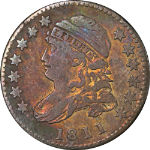
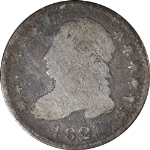
1811/09 Bust Dime Choice VF/XF Great Eye Appeal Nice Strike
SKU: TE3623
SKU: TE3623
This wonderfully original 1811/09 Bust Dime has great eye appeal and nice strike. Outstanding color and surfaces. Grade: Choice VF/XF
| Check by mail | Credit Card/PayPal |
|---|---|
| $1,240.00 | $1,275.00 |
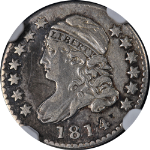
1814 Bust Dime JR-5 'STATESOF' NGC XF Details Nice Eye Appeal Nice Strike
SKU: PSB49501
SKU: PSB49501
This 1814 Bust Dime JR-5 has nice eye appeal and nice strike. Coin really doesn't look cleaned. Tough variety. Certified: NGC XF Details
| Check by mail | Credit Card/PayPal |
|---|---|
| $830.00 | $855.00 |
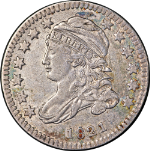
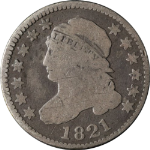
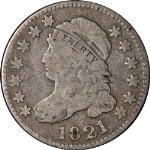
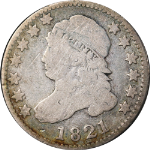
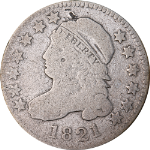
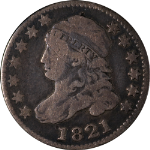
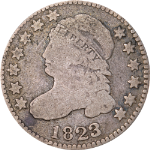
1821 Bust Dime 'Small Date' Choice XF/AU Great Eye Appeal Strong Strike
SKU: TE4176
SKU: TE4176
This original 1821 Bust Dime has great eye appeal with nice luster and strong strike. Outstanding color and surfaces. Grade: Choice XF/AU
| Check by mail | Credit Card/PayPal |
|---|---|
| $570.00 | $590.00 |
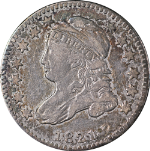
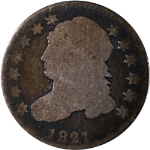
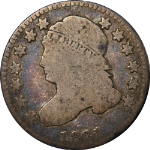
1821 Bust Dime Small Date Nice VF Great Eye Appeal Nice Strike
SKU: TE3924
SKU: TE3924
This original 1821 Bust Dime Small Date has great eye appeal and nice strike. Great color and surfaces. Grade: Nice VF
| Check by mail | Credit Card/PayPal |
|---|---|
| $198.00 | $204.00 |
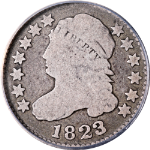
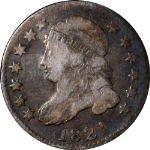
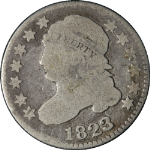
1823/2 Bust Dime Small 'E's ANACS G4 Superb Eye Appeal Strong Strike
SKU: PSB50160
SKU: PSB50160
This wonderfully original 1823/2 Bust Dime has superb eye appeal and strong strike. Nearly perfect color and surfaces for the grade. Certified: ANACS G4
| Check by mail | Credit Card/PayPal |
|---|---|
| $105.00 | $108.00 |
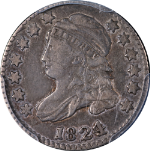
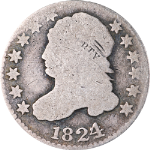
1824/2 Bust Dime PCGS VF25 Superb Eye Appeal Nice Strike
SKU: PSB46470
SKU: PSB46470
This wonderfully original 1824/2 Bust Dime has superb eye appeal and nice strike. Outstanding color and surfaces. Certified: PCGS VF25
| Check by mail | Credit Card/PayPal |
|---|---|
| $705.00 | $725.00 |
Learn More About U.S. Bust Dimes (1796-1837)
Bust dimes featuring the head of Lady Liberty were first produced by the U.S. Mint in 1796, with the first type being the Draped Bust dime. That right-facing portrait with flowing hair on the obverse remained the same until 1807, but the Draped Bust series had two reverses: the Small Eagle until 1797, and the Heraldic Eagle from 1798 through 1807. In 1809, the Mint began producing a new Capped Bust design of the U.S. dime with Lady Liberty facing left and wearing a cap with the word “LIBERTY” embellished across the cap’s bottom. The reverse side of the Capped Bust dime features a bald eagle grasping three arrows and an olive branch. Interestingly, the Capped Bust dime was the first dime to state its value. The Bust dime was replaced with the Seated Liberty dime in 1837.
What is a U.S. Bust dime worth? Contact our expert numismatists at 1-800-965-2646.